
Things to Do in Liverpool: What City Guides Miss

Every Liverpool guide runs through a familiar checklist: the Cavern Club, Albert Dock, the Beatles Story, Tate Liverpool, maybe a stadium tour if there’s time. They’re all worth seeing, but they only tell part of the story.
Look a little further and Liverpool opens up differently. There are neighbourhoods locals spend time in, a cultural scene beyond the headline galleries, and pieces of the city’s history that many visitors never hear about.
This guide looks at the places that often get missed, from the Baltic Triangle and Georgian Quarter to Chinatown, independent food and drink spots, and a worthwhile day trip beyond the city.
Liverpool's Neighbourhoods Do the Heavy Lifting
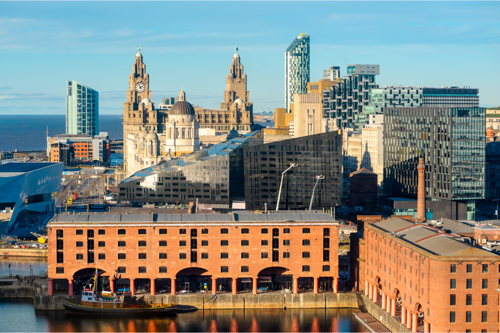
Liverpool's most interesting corners aren't on the standard route between the station and the waterfront. They're only a short walk further in, in three different directions, alongside the more expected stops and attractions, and each one is worth treating as a proper stop rather than a diversion.
The Baltic Triangle
Ten minutes on foot from the centre, the Baltic Triangle takes its name from the area's Scandinavian dockside heritage, anchored by the Gustaf Adolf Kyrka, a seamen's church built in the 1880s for the Swedish sailors and Scandinavian immigrants who once passed through the port.
The district is home to the Liverpool Biennial, the UK's largest free festival of contemporary art, whose roots are widely traced back to the A Foundation, the contemporary art space that once occupied the same streets.
Beyond the festival itself, the neighbourhood runs on a handful of genuine anchors: Camp and Furnace for bar, event space, and live music inside a converted warehouse; Baltic Market for its food hall format, more than a dozen independent kitchens under one roof; Picante for Mexican street food; Manifest for small-producer, seasonal cooking.
Street art runs through most of the district too, worth a slow walk rather than a single photo stop.
The Shoreditch and Brooklyn comparisons get made a lot, and they're not wrong exactly, but the Baltic Triangle doesn't need the comparison to make its case. What's actually there is enough.
The Georgian Quarter and Hope Street
Hope Street runs between Liverpool's two cathedrals, the Anglican Cathedral at one end and the Metropolitan Cathedral of Christ the King at the other, with Liverpool Cathedral itself worth the climb for the view alone.
Between them sits the Georgian Quarter: cobbled streets and Georgian townhouses, including Rodney Street, once the city's Georgian doctors' row and still lined with the brass plaques to prove it.
The same stretch holds Philharmonic Hall, the art deco home of the Royal Liverpool Philharmonic Orchestra, and the Everyman Theatre, both close enough to fold into the same walk.
Where the Baltic Triangle runs on energy, this is the older, quieter register, and it's not a lesser stop for it.
Chinatown's Lesser-Known History
At the top of Nelson Street stands the Chinese Arch, 44 feet tall and built by sixteen artisans brought over from Shanghai, Liverpool's twin city. It's the largest arch of its kind outside mainland China, and most visitors photograph it and move on without knowing much more.
The history underneath it is worth the extra ten minutes. Liverpool is home to the oldest Chinese community in Europe, dating to the early 1800s, when Chinese seafarers working the shipping lines began settling near the docks.
What's rarely mentioned on a standard visit is the harder part of that history: after the Second World War, hundreds of Chinese sailors who had lived and worked in Liverpool for years, many with British families, were forcibly repatriated by the government, separating fathers from children with little warning and even less explanation.
It's one of the most significant and least-told immigration stories in the country, not just a backdrop for a photo of the arch.
Art and Culture Beyond Tate Liverpool
Tate Liverpool draws the crowds for good reason, but it's not the only serious gallery in the city.
FACT Liverpool on Wood Street works in digital and new media art, with a Picturehouse cinema built into the same building and free entry to every exhibition. Open Eye Gallery focuses on photography and documentary work, and turns up as a Biennial venue in its own right most years.
Neither tries to compete with Tate's collection, and neither needs to. Both are closer to the city's current, working art scene than its established one, the kind of galleries that change what's on the wall often enough to be worth a second visit.
Where to Eat and Drink Like a Local
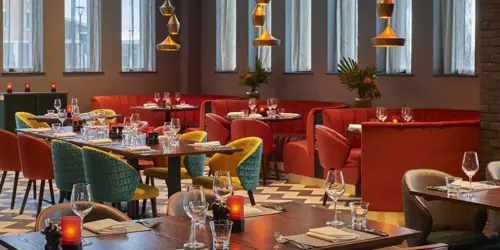
Baltic Market is worth returning to specifically for its format: a dozen-plus independent kitchens sharing one room rather than a single restaurant recommendation, which makes it the better pick for a group that can't agree on a cuisine.
Bold Street and the Ropewalks fill the gap between the tourist centre and Chinatown with independent restaurants and boutiques worth a wander in their own right.
Chinatown's own restaurants are a genuine dining destination rather than just the streets around the arch.
Chez Mal Brasserie & Bar at Malmaison works as the anchor to come back to across a longer stay: locally sourced menus, a Sunday lunch worth building a morning around, and a bar that holds its own once the evening's other plans have run their course.
Beyond Liverpool: A Day Trip to Chester
Chester is the standout inland day trip from Liverpool, around 45 minutes away by train, and different enough from the city itself to make the day feel like its own trip rather than an extension of it.
The city walls are the most complete Roman and medieval circuit in Britain, a two-mile walk that takes in the whole historic centre from above street level. Below them, the Rows are unique to Chester: two-tier medieval shopping galleries, black-and-white timbered buildings with a full covered walkway running above the shops at street level, a form that doesn't turn up anywhere else in the country.
Chester Cathedral traces back to a Saxon minster on the same site, refounded as a Benedictine abbey in 1092. The building that stands today was raised mostly from the mid-13th century through to just before the abbey's dissolution in the 1540s, work that spanned generations of masons and several changes of plan along the way.
The Roman Amphitheatre, the largest in Britain and free to visit year-round, sits at the edge of the old fortress of Deva that the whole city grew out of.
For a coastal day trip instead, Crosby and Formby offer a change of scenery, with sandy beaches and coastal walks within easy reach of Liverpool.
Staying at Malmaison Liverpool
Malmaison Liverpool sits at 7 William Jessop Way, on the waterfront at Princes Dock, a few minutes from Albert Dock. It's close to the obvious stuff, half a mile from the Cavern Club and the Museum of Liverpool, and just as close to everything covered above: the Baltic Triangle, the Georgian Quarter, and Chinatown are all within an easy walk or a short cab ride.
Rooms run from Standard through to Club Deluxe and Signature Suites, bold design, lavish bedding, air conditioning throughout. However the day's been spent, a walk through the Baltic Triangle, an afternoon in Chinatown, a full day out in Chester, Chez Mal is where most evenings here end up: a proper dinner and a drink rather than room service and an early night.
FAQs About Things to Do in Liverpool
What are the best day trips from Liverpool?
Chester is the standout inland day trip from Liverpool, around 45 minutes by train, and suits anyone after history and architecture over sand. For the coast, Crosby Beach and Formby are the pick of the options within easy reach of the city, both covered in full in Malmaison's guide to Liverpool's best beaches.
How many days do you need in Liverpool?
Two nights is a realistic minimum for Liverpool beyond the standard highlights. One day covers the neighbourhoods and the art beyond Tate, a second allows time for Chester without rushing the city itself. Three days gives room for the coast too.
Is Liverpool good for a couples' weekend?
Yes. Liverpool's nightlife reputation is real, but the Baltic Triangle's bars and restaurants, the Georgian Quarter's cathedrals and theatre, and Chez Mal's brasserie setting all suit a couple's weekend just as easily as a group one, particularly outside peak stag and hen weekends.
What can you do in Liverpool on a rainy day?
FACT Liverpool and Open Eye Gallery both make for a full afternoon indoors without it feeling like a fallback plan, contemporary art and photography rather than something to kill time until the weather clears. The Georgian Quarter holds up just as well in the rain: both cathedrals and the Philharmonic Hall are weatherproof stops worth doing in their own right.
What are Liverpool's must-see attractions?
Albert Dock, the Cavern Club, the Beatles Story, and Tate Liverpool are Liverpool's most visited attractions and worth doing on a first trip. Beyond that first pass, the Baltic Triangle, the Georgian Quarter, and Chinatown are where the city's actual character shows up once that list is out of the way.